Porsche’s Facelifted Panamera May Be Killing Its Last Physical Switches
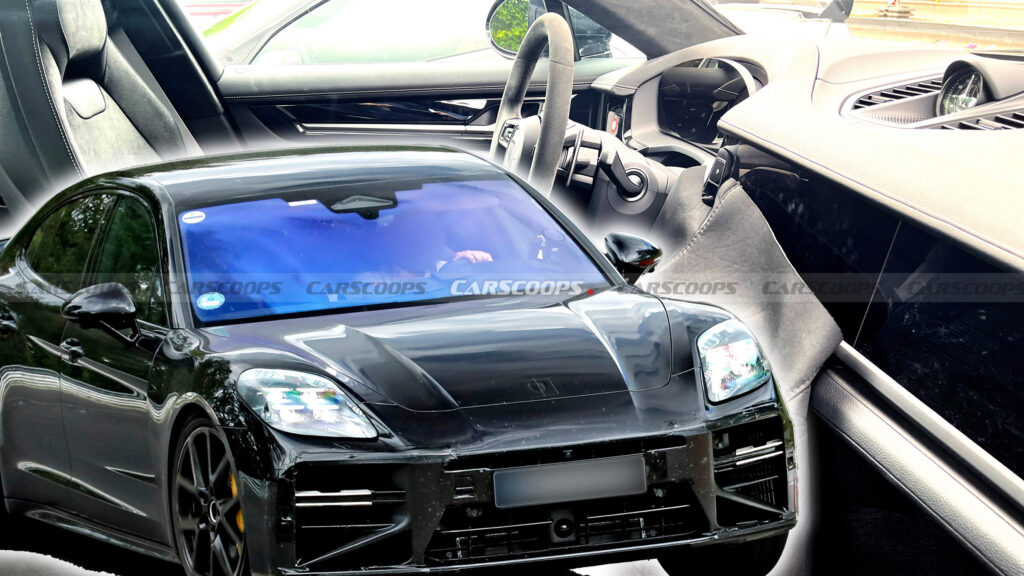
- Latest prototype confirms Porsche plans tweaks to Panamera’s interior.
- Console redesign could replace physical climate controls with touchscreen.
- One of the test cars makes us think the GTS might be getting hybrid power.
The facelifted Porsche Panamera is back at the Nürburgring, and while the exterior isn’t giving away many new secrets, the cabin might be. When we last caught the updated Panamera testing in snowy Scandinavia back in January, the focus was on exterior revisions. Camouflage hinted at changes to the lights, bumpers, and driver assistance hardware, but the interior remained hidden from view. This time things are different.
The latest prototype appears to feature a revised center console, and the changes could signal the end of one of the Panamera’s more traditional touches. The current model uses a bank of physical toggle switches for climate functions, helping separate it from rivals that have moved almost every control onto a touchscreen. Now it looks like Porsche may be heading in the same direction.
Related: The 911 GT3 RS Already Looks Like A Race Car, Porsche Is Making It Even More Like One
Although the disguise makes it difficult to see exactly what’s happening beneath the covers, the shape of the concealed area suggests the automaker could be replacing those switches with another display. If that’s the case, the Panamera‘s screen count would climb to four when equipped with the optional passenger display mounted above the glovebox.
At first glance, it seemed possible Porsche might borrow the layout from the new Cayenne Electric. That SUV features a central infotainment screen paired with a lower touchscreen dedicated to climate and vehicle functions. But there’s a problem with that theory.
Unlike the Cayenne Electric prototypes we’ve seen, this Panamera doesn’t appear to have air vents positioned above the central display. That strongly suggests the vents remain located beneath the infotainment screen, just as they are in today’s car, meaning Porsche may have developed a different solution entirely.
Panamera 4S E-Hybrid
Outside, the camouflage looks largely unchanged from the prototype we saw earlier this year. The updated headlights, revised bumpers, and new radar hardware all appear to be carried over from previous test vehicles. But this time our photo crew spied two different Panameras, both with a charging flap on the left side, indicating that they’re plug-in hybrids.
GTS Going PHEV?
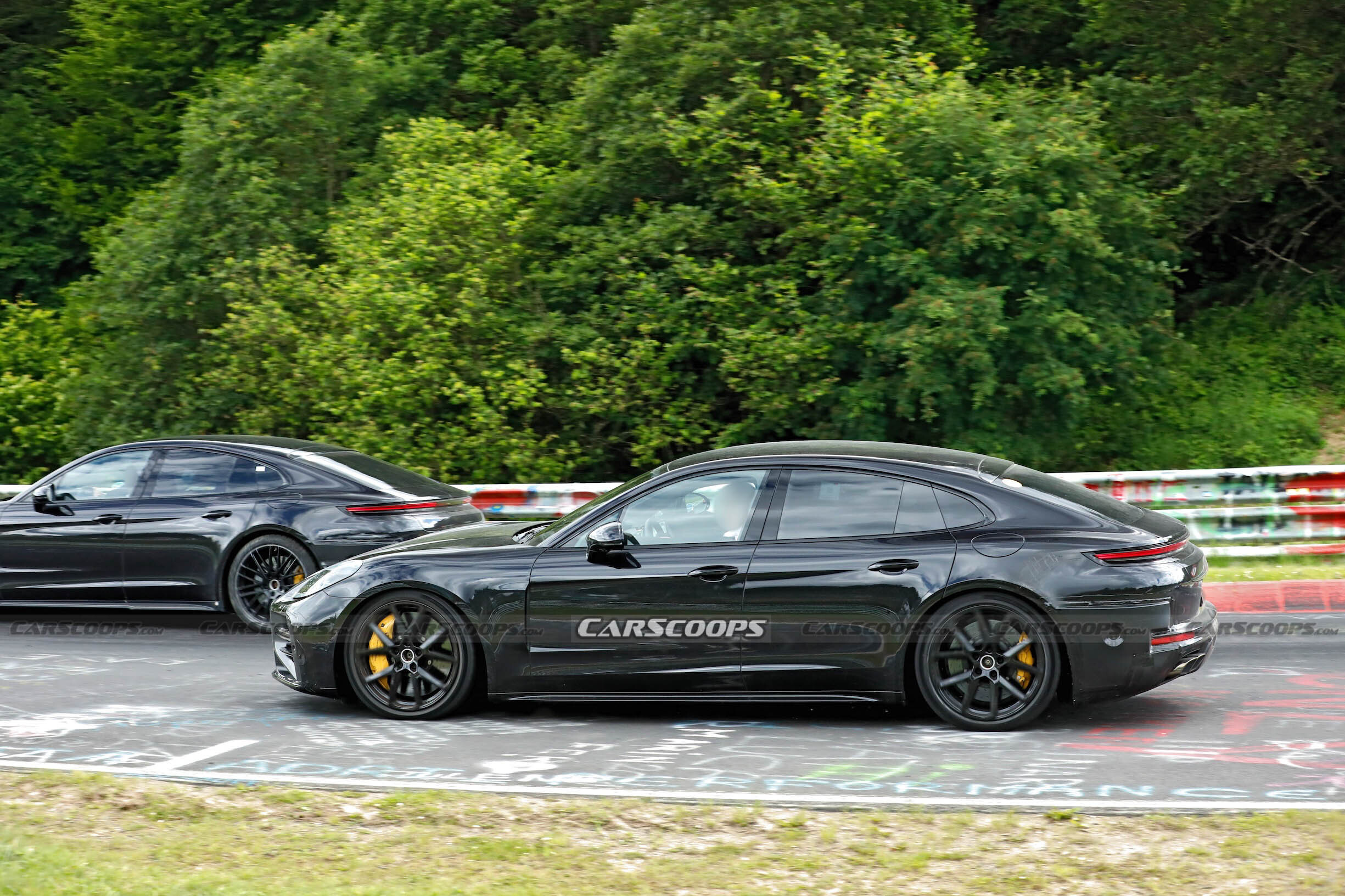
One of the cars has square tailipes, suggesting it’s either a Turbo E-Hybrid or Turbo S E-Hybrid, while the other one has four round pipes, and the only current Panamera hybrid with four round exhaust tips is the 4S E-Hybrid. But this prototype’s front bumper, DRL positioning, and the fact that the lower portion of the rear bumper – where a diffuser might live – is covered over, makes us wonder if it’s actually a GTS. The current GTS’s V8 has no hybrid help, but is that about to change?
Porsche hasn’t given any clues about powertrain changes for the facelift, so it’s only speculation on our part at this stage. The current lineup starts with a turbocharged V6 producing 348 hp (353 PS) in the base model, steps up to a 493 hp (500 PS) V8 in the GTS, and relies on plug in hybrid technology for the bulk of its performance credentials and sales.
Those electrified models range from the 463 hp (468 PS) Panamera 4 E-Hybrid all the way to the range-topping Turbo S E-Hybrid, which packs a staggering 771 hp (782 PS). Prices currently start at around $113,000 and climb beyond $240,000 for the most powerful versions, though when the new-look cars are rolled out the base price will likely have edged closer to $120k.
Panamera Turbo E-Hybrid
Baldauf
The Auto World


Comments
Post a Comment