The Man Behind the Original Corvette Stingray Just Built The Version He Always Wanted

- Brock’s concept revisits his 1957 Sting Ray design sketch.
- LT4 V8 makes 725 hp with a five-speed manual, rear drive.
- Split-window coupe heads to Mecum Kissimmee in 2026.
It’s hard to wrap the 1963 Corvette Stingray in just one word, but if you had to try, “definitive” wouldn’t be far off. This was, and arguably still is, one of the most significant American sports cars ever built. That status holds up regardless of which badge you usually root for.
Now, Peter Brock, the original designer of the ’63 Stingray, and also the man behind the Shelby Daytona Cobra Coupe, has revealed what he considers the ultimate version of that iconic split-window coupe. Oh, and it’s going up for sale: all 725 horsepower (540 kW) of it.
Legacy Reimagined
Brock submitted a sketch for what would one day become the 1963 Corvette Stingray back in 1957. He was just 21 at the time, and budgets, tooling, and production realities evolved his vision. Now, at 89 and firmly established as automotive royalty, Brock decided that it was time to build the dream that Chevrolet never could. The result is nothing short of stunning.
More: Peter Brock And Ian Callum Creating Electric C2 Corvette With 2,000 HP
He’s called it a “Studio Concept,” referencing GM’s tradition of one-off design studies built to show top brass what could be done when the normal rules were suspended. In that same spirit, Brock’s version blends purposeful engineering with pared-back styling cues.
Mecum
From the outside, it’s both clearly a ’63 Stingray and very much updated. The split window remains but the headlights are totally different. Brock selected Ferrari Azzurro California Blue for the paint. The brightwork is mostly gone in favor of black chrome. The original decorative scoops and vents have also been swapped for functional components. Those are key because of the running gear in this car.
“Being able to make these openings fully operational made my version far more honest without changing Mitchell’s basic design,” Brock explained earlier this year in Classic Motorsports.
Mecum
“Same with the car’s new headlights: I was able to smooth the design’s original nose and eliminate the complicated flip-up lights that have been a constant source of problems for those who demanded perfect cut lines while retaining full operation,” he wrote.
Unlike many modern restomods that distort the proportions or inflate every feature, Brock’s build takes a subtler approach. He refers to it as “resto-refinement,” aiming to preserve the design’s original restraint. That means no enormous wheels, no aggressive stance, and no reshaped fenders. Instead, the lines are cleaner, and every change earns its place.
From a few feet away, it could almost pass for a well-preserved original. But the closer you get, the more it rewards the eye with thoughtful detail.
Power Meets Poise
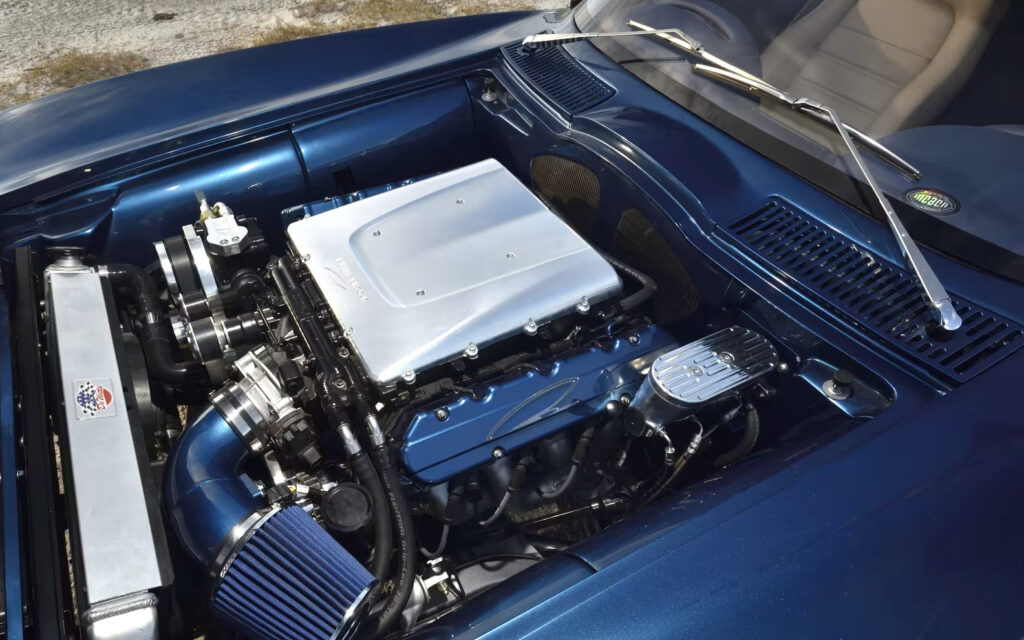
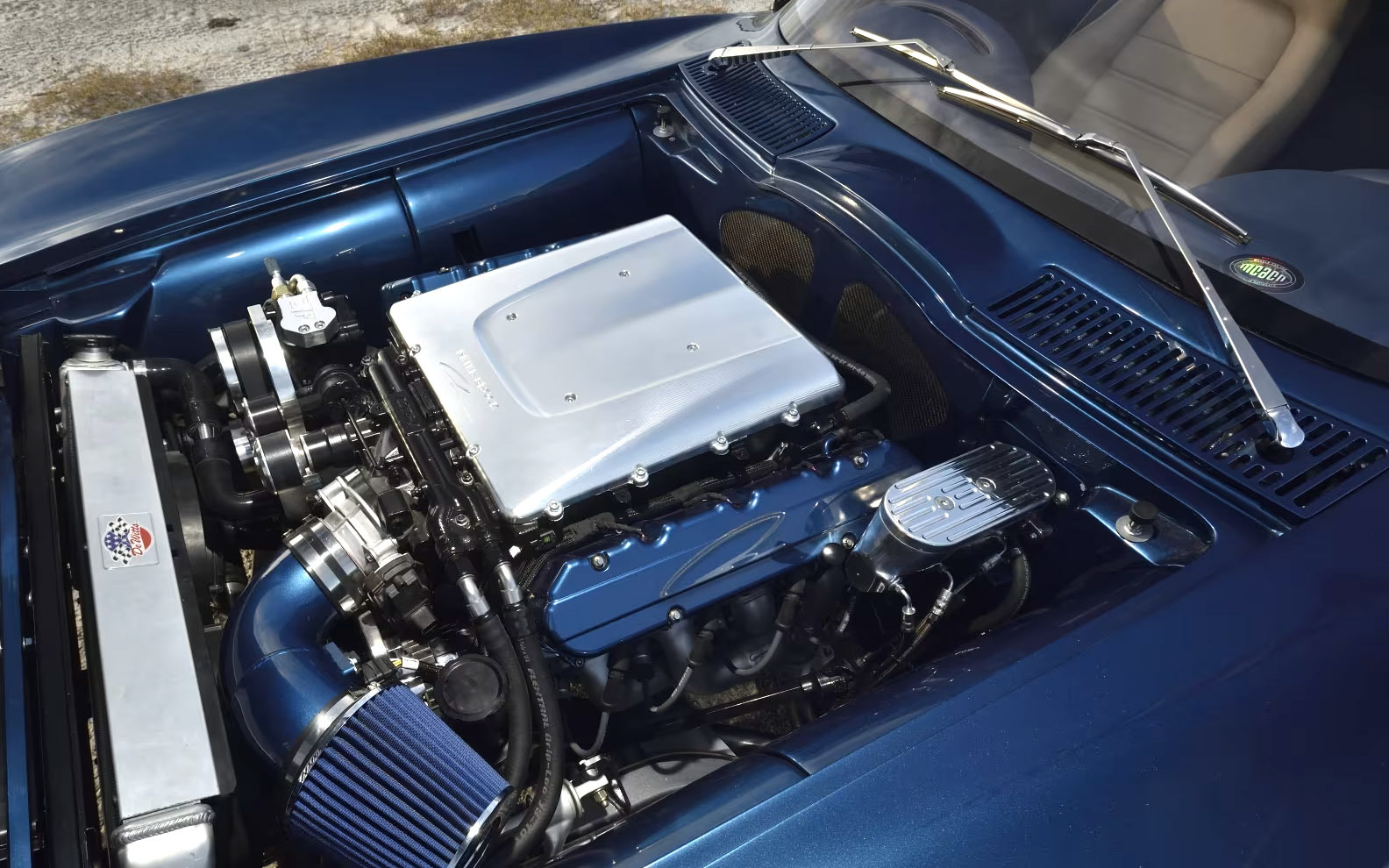
Under the hood is an LT4 V8 that makes 725 horsepower. Complete with forged internals, it should have no problem reliably putting that power down through a Tremec five-speed manual gearbox and rear-wheel drive.
An Art Morrison chassis ensures that this Stingray won’t twist and bend under heavy torque loads. Wilwood brakes and a C7 Corvette suspension setup keep the car under control.
“Best of all and completely invisible is this car’s focus on performance,” Brock wrote. “All these mechanical upgrades provide today’s best in performance and handling while retaining all of the car’s original lines.”
Designed to Be Driven
Mecum
Inside, Douglas leather, Sparco buckets, Dakota Digital gauges signed by Brock himself, Vintage Air, and modern sound deadening strike a rare balance between comfort and intent.
The car made its debut at SEMA, where it quietly stood apart from the louder, more extreme builds nearby. Brock saw it as a response to a restomod culture that often values flash over function.
“It confirmed my belief in a restoration direction that prioritizes form and function over such obvious modifications as minimum ground clearance or oversized wheel-and-tire combinations that demand reshaping the fender,” he said, noting how often today’s customs stray far from the original design language.
Mecum
Headed over the auction block at Mecum’s 2026 Kissimmee event, Brock’s split-window concept feels less like a tribute and more like a long-delayed correction. In his own words, it’s “a personal interpretation of what it should have been.” Judging by the result, it’s hard to argue.
Want to see what happens when a design legend finally stops asking for permission? The listing’s right here. Or just scroll through the photos and come to terms with the fact that your project car will never look this good.
Photos Mecum
The Auto World


Comments
Post a Comment